
Nova Scotia, a province celebrated for its abundant forests and rich ecological diversity, stands as a paradise for mushroom aficionados. The area’s humid climate and an array of habitats, spanning from coastal regions to dense woodlands, establish an optimal setting for a diverse range of fungi to thrive.
Mushrooms in Nova Scotia
Magic mushrooms in Nova Scotia, like elsewhere, captivate the curiosity of foragers and nature enthusiasts. However, it’s essential to note that the use of psychedelic mushrooms is illegal in Canada, including Nova Scotia. Instead, the province boasts a rich variety of edible and non-psychoactive mushrooms that are cherished for culinary and ecological purposes. Nova Scotia’s lush forests and varied ecosystems provide an ideal habitat for a wide array of fungi, including edible species like chanterelles, morels, and lobster mushrooms.
In this article, we will explore the 20 most prevalent mushrooms discovered in Nova Scotia, providing detailed information about their distinctive attributes and preferred habitats. Discovering the Prime Mushroom Hunting Spots in Nova Scotia
1. Chanterelles (Cantharellus spp.)
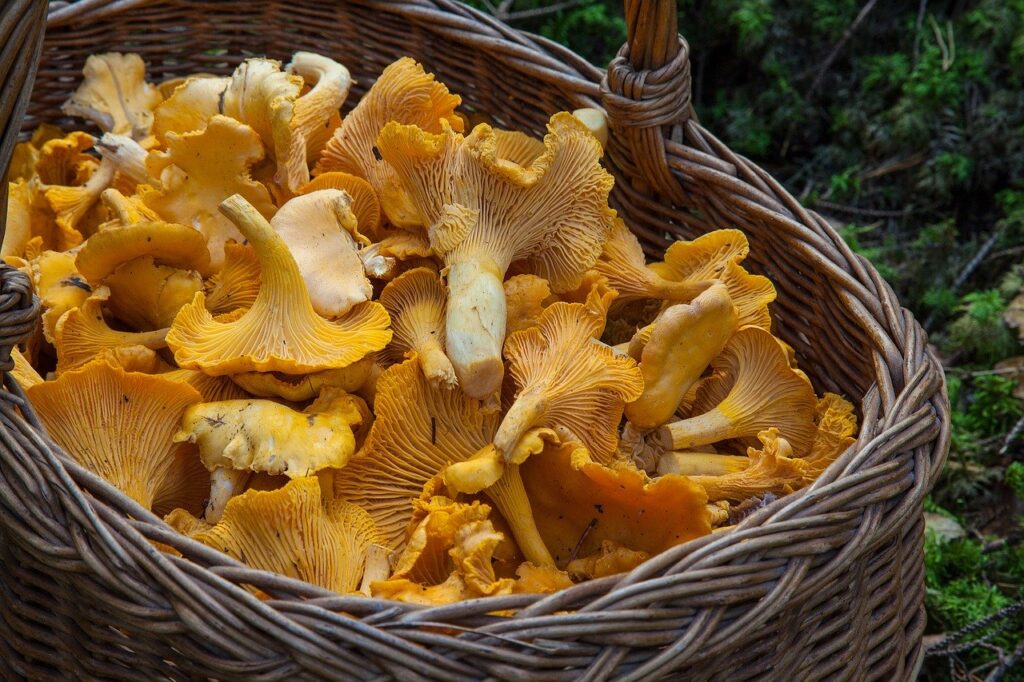
These distinct, trumpet-shaped mushrooms are a forager’s delight. Recognized for their vibrant yellow to orange color and unique, wavy edges, chanterelles are not only beautiful but also sought after for their delicate, peppery flavor. They typically grow in mossy, coniferous forests.
2. Morels (Morchella spp.)
Morels are among the most prized wild mushrooms, known for their honeycomb-like appearance. They thrive in mixed hardwood forests, especially around ash, elm, and apple trees. Morels are celebrated for their earthy, nutty flavor.
3. Boletes (Boletus spp.)
Boletes are easily identified by their thick stems and sponge-like undersides. They are commonly found in wooded areas, often under oak or pine trees. Boletes are known for their meaty texture and are a favorite among mushroom hunters.
4. Fly Agaric (Amanita muscaria)
The iconic red mushroom with white spots, Fly Agaric, is a common sight in Nova Scotian forests. Although striking, it is toxic and should not be consumed. It typically grows near birches and pines.
5. Birch Polypore (Fomitopsis betulina)
This bracket fungus is commonly found on dead or dying birch trees. It has a smooth, creamy white surface and is known for its medicinal properties, historically used for its antiseptic and anti-inflammatory qualities.
6. Oyster Mushrooms (Pleurotus ostreatus)
These fan-shaped mushrooms grow on the sides of trees, particularly on dead or decaying wood. Oyster mushrooms are not only common but also edible, valued for their delicate texture and mild, anise-like flavor.
7. Lobster Mushroom (Hypomyces lactifluorum)
This unique mushroom is actually a parasitic fungus that grows on other mushrooms, transforming them into bright orange or red specimens. Found in hardwood forests, they are known for their seafood-like taste.
8. Turkey Tail (Trametes versicolor)
Turkey Tail is a common bracket fungus with a striking, multi-colored fan-like appearance. It grows on dead logs and stumps, and is well-known for its immune-boosting properties.
9. Puffballs (Lycoperdon spp.)
Puffballs are spherical or pear-shaped mushrooms that release clouds of spores when mature. They can be found in grassy areas and forests, and are edible when young and the inside is completely white.
10. Shaggy Mane (Coprinus comatus)
This tall, cylindrical mushroom, known for its shaggy appearance, is often found in disturbed grounds, such as roadsides and lawns. It’s edible, but must be consumed soon after harvesting as it quickly decomposes.
11. Birch Bolete (Leccinum scabrum)
The Birch Bolete is recognized by its brown cap and white to gray stem with dark scab-like scales. It forms a symbiotic relationship with birch trees and is edible, offering a mild, earthy flavor.
12. Honey Fungus (Armillaria mellea)
This parasitic mushroom is known for its honey-colored caps and black, root-like structures. It often grows in clusters on living or dead wood and is edible, but some people may find it slightly bitter.
13. Artist’s Conk (Ganoderma applanatum)
A large bracket fungus, Artist’s Conk grows on hardwood trees. The underside of this mushroom turns brown when scratched, making it popular for etching art. It’s also used in traditional medicine.
14. Hedgehog Mushroom (Hydnum repandum)
These unique mushrooms have spines instead of gills under their caps. Found under hardwoods and conifers, they are edible and have a sweet, nutty flavor.
15. Destroying Angel (Amanita virosa)
One of the most poisonous mushrooms, the Destroying Angel is characterized by its pure white appearance. It’s often found in wooded areas and should never be consumed.
16. Chicken of the Woods (Laetiporus sulphureus)
This brightly colored, shelf-like fungus is found on dead or dying trees, particularly oaks. Edible and meaty, it’s named for its chicken-like taste.
17. False Morel (Gyromitra spp.)
False Morels resemble true morels but are toxic. They have a brain-like or wrinkled cap and grow in similar habitats as true morels. Caution is advised as they can be mistaken for the edible variety.
18. Common Ink Cap (Coprinopsis atramentaria)
This small, grey mushroom is often found in groups in grassy areas. It’s named for the inky substance it releases as it decomposes. While edible, it should not be consumed with alcohol.
19. Slippery Jack (Suillus luteus)
Easily identified by their slimy caps, these mushrooms grow in association with pine trees. They are edible but require careful preparation to remove the slippery outer layer of the cap.
20. The Blusher (Amanita rubescens)
This mushroom gets its name from the pinkish-red blush that appears when its white flesh is bruised. Found in wooded areas, it’s edible when cooked but toxic when raw.
Conclusion
Nova Scotia’s rich fungal biodiversity offers a fascinating world for mushroom enthusiasts and nature lovers. Whether you’re a seasoned forager or a curious observer, these 20 common mushrooms provide a glimpse into the province’s mycological treasures. Always remember to exercise caution and consult expert guidance before consuming any wild mushrooms, as some can be poisonous. Happy mushroom hunting in the enchanting forests of Nova Scotia!