Introduction
As conversations around psychedelics become more mainstream, magic mushrooms are often mentioned alongside both natural wellness remedies and laboratory-developed compounds. This overlap has led to a common question: are magic mushrooms natural, synthetic, or something in between? The answer is more nuanced than it may seem and requires understanding both where magic mushrooms come from and how their active compounds are used today.
Clarifying this distinction is important not only for general knowledge, but also for discussions around safety, legality, research, and responsible use.
What Are Magic Mushrooms?
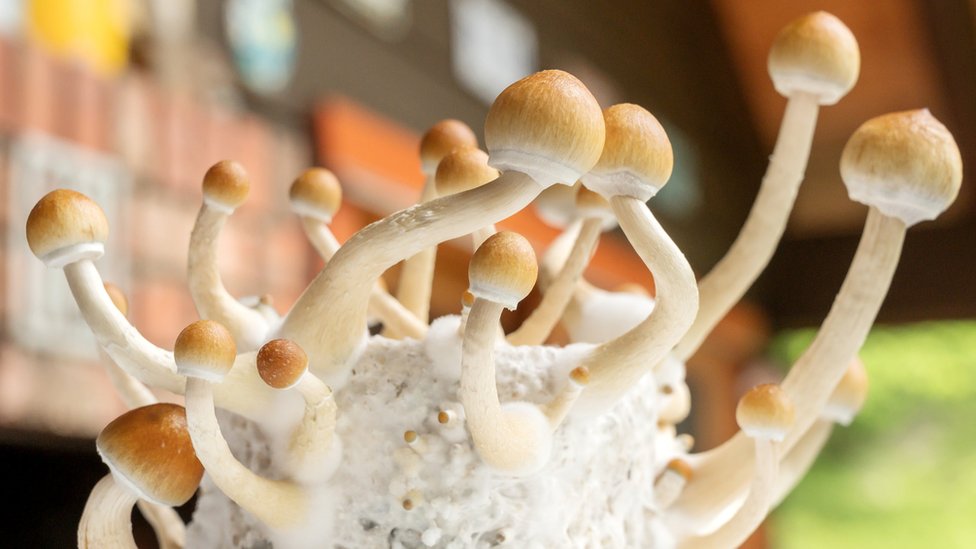
Magic mushrooms are a group of fungi that naturally contain psychoactive compounds, primarily psilocybin and its active form, psilocin. These compounds are responsible for the altered perceptions, mood changes, and cognitive effects commonly associated with psychedelic experiences.
There are many species of mushrooms that contain psilocybin, and they grow naturally in various parts of the world. They thrive in environments such as forest floors, grasslands, and areas with rich organic matter. In their natural form, magic mushrooms are living organisms that grow without human chemical synthesis.
From a biological standpoint, magic mushrooms themselves are entirely natural.
Psilocybin: A Naturally Occurring Compound
Psilocybin is a naturally occurring chemical produced by certain mushroom species as part of their biological makeup. When ingested, psilocybin is converted by the body into psilocin, which interacts with serotonin receptors in the brain.
This interaction is what leads to changes in perception, emotion, and thought patterns. Importantly, psilocybin is not added to mushrooms artificially—it is created by the fungus itself.
In this sense, the primary psychoactive substance in magic mushrooms is naturally occurring, much like caffeine in coffee beans or THC in cannabis plants.
Where the Confusion Comes From
The confusion around whether magic mushrooms are natural or synthetic often arises from how psilocybin is discussed in medical and scientific settings.
In research environments, psilocybin is frequently isolated and synthesized in laboratories. This synthetic psilocybin is chemically identical to the compound found in mushrooms, but it is produced under controlled conditions to ensure precise dosing, purity, and consistency.
Because clinical studies often involve lab-produced psilocybin rather than whole mushrooms, people may assume that magic mushrooms themselves are synthetic. In reality, it is the extracted compound—not the mushroom—that may be synthesized for research purposes.
Natural Mushrooms vs. Synthetic Psilocybin
While magic mushrooms are natural organisms, synthetic psilocybin is a manufactured version of the same molecule. The key difference lies in form and context, not chemical identity.
Natural magic mushrooms contain a range of compounds beyond psilocybin, including other alkaloids and organic materials that may influence the overall experience. Synthetic psilocybin, on the other hand, is a purified compound designed to isolate effects and reduce variability.
This distinction matters primarily in scientific and medical contexts, where controlled dosing and reproducibility are essential. From a chemical perspective, however, psilocybin remains the same molecule whether it comes from a mushroom or a laboratory.
Why Research Often Uses Synthetic Psilocybin
Modern clinical research prioritizes safety, standardization, and accuracy. Using whole mushrooms introduces variability because natural specimens can differ in potency based on species, growing conditions, and age.
Synthetic psilocybin allows researchers to administer exact doses and track outcomes more reliably. This approach supports rigorous study designs and helps regulatory bodies evaluate potential therapeutic applications.
The use of synthetic psilocybin in research does not mean that magic mushrooms are artificial. It simply reflects the requirements of modern scientific investigation.
Are Magic Mushrooms Considered “Natural” in Wellness Discussions?
In popular wellness and cultural discussions, magic mushrooms are often described as natural because they grow in nature and are not manufactured. This classification aligns with how many people understand natural substances.
However, “natural” does not automatically mean safe, legal, or appropriate for everyone. Many natural substances can have powerful effects and potential risks. This is why education and context matter more than labels.
Recognizing magic mushrooms as natural organisms helps clarify their origin, but it should not oversimplify their complexity or impact.
Legal and Ethical Distinctions
Legally, the natural origin of magic mushrooms does not necessarily make them permissible. In many regions, both natural mushrooms and synthetic psilocybin are regulated or prohibited due to their psychoactive properties.
Interestingly, some jurisdictions are more open to medical research using synthetic psilocybin than to personal use of natural mushrooms. This highlights how legality is often shaped by control and regulation rather than natural versus synthetic status.
Understanding this distinction helps explain why mushrooms can be both natural and restricted at the same time.
Safety Considerations Beyond the Natural vs. Synthetic Debate
Whether a substance is natural or synthetic is only one part of the safety conversation. Dosage, setting, mental health history, and individual sensitivity all play significant roles in how psilocybin affects a person.
Natural magic mushrooms can vary widely in potency, making effects unpredictable. Synthetic psilocybin offers consistency but still requires professional oversight in clinical settings.
The key takeaway is that origin alone does not determine risk or benefit.
Also Read: How to Store Shrooms Properly: Fresh, Dried, and Edibles
Conclusion
Magic mushrooms are natural organisms that grow in the wild and contain naturally occurring psychoactive compounds. They are not synthetic by nature. However, the same active compound found in these mushrooms—psilocybin—can be and often is synthesized in laboratories for research and medical use.
Understanding this distinction helps separate biological reality from modern application. Magic mushrooms are natural, but their role in science, medicine, and regulation often involves synthetic versions of their active ingredients.